

SHUTTLE
Stablecoin Rails for B2B
Enterprise treasury controls on regulated stablecoin infrastructure. Works for any B2B payment—built for cross-border.

THE FRICTION
Where Traditional Rails Break Down
Correspondent chains, FX spreads, banking hours. Cross-border B2B payments weren't built for speed.
$15-50+
per intermediary hop
Source: Oliver Wyman / JP Morgan
2-4%
hidden in FX spreads
Source: Treasury industry benchmarks
59%
cite speed as top pain point
Source: Citi corporate survey, 2024
HOW IT WORKS
Settlement Without Intermediaries
No correspondent banks. No batch windows. No banking hours.
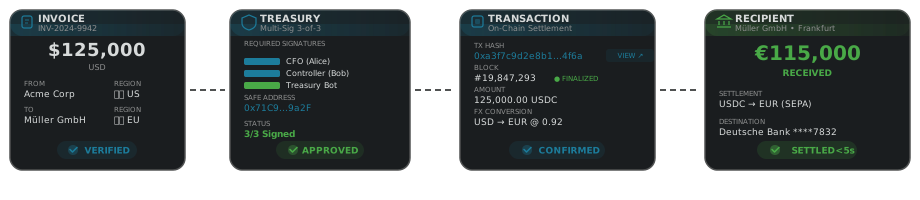
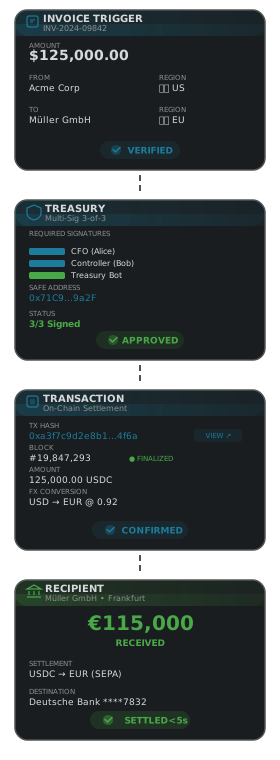
1
Connect Your Systems
ERP/TMS integration via REST API or SDK. Map payment triggers to Shuttle endpoints.
2
Treasury Approves
Multi-sig with configurable thresholds. 2-of-3, 3-of-5, or custom. Your keys, your control.
3
Settlement Executes
USDC/EURC moves in seconds on Presto L2. Gasless transactions. Cryptographic proof.
4
Recipient Chooses
Hold stablecoins or off-ramp to fiat instantly via integrated partners.
WHY NOW
The Infrastructure Finally Caught Up
Payment stablecoins now have clear legal status in major jurisdictions.
United States
GENIUS ACT
🇺🇸
Signed July 2025, effective Jan 2027
Stablecoins ≠ securities or commodities
100% reserve requirement
Bankruptcy protections for holders
European Union
MiCA Framework
🇪🇺
In effect December 2024
EURC is fully compliant
Clear issuer requirements
Cross-border passporting
Hong Kong
Stablecoin Ordinance
🇭🇰
Passed May 2025
Regulatory sandbox active
APAC corridor enablement
Gateway to regional settlement
YOUR TREASURY, YOUR RULES
Enterprise-Grade Controls
Multi-sig wallets. Configurable governance. Real-time audit.
Multi-Sig Treasury
Multi-Sig Treasury Gnosis Safe integration. Configure approval thresholds—2-of-3, 3-of-5, or custom. Your signers, your keys.
Programmatic Triggers
Settlement on Thread verification, API call, webhook, or schedule. Payments execute when conditions are met.
Audit Trail
Every settlement signed and recorded. Export logs anytime. SOC 2 Type II compliant infrastructure.
System Integration
REST APIs, webhooks, SDKs. SAP, Oracle, NetSuite connectors. Map to your existing treasury workflows.
PAYMENT RAILS
Stablecoin Native, Fiat-Flexible
Settle on-chain with USDC or bridge to traditional rails. Recipients choose their preference. You never hold volatile assets.
Stablecoin Settlement
USDC, EURC on Interweave's private zkEVM L2 runtime. Instant finality.
Fiat Off-Ramp
Flexible rails via ACH, SEPA, SWIFT through integrated partners.
See It In Your Corridor
Pick your most painful route. We'll show you the math.
IN PRACTICE
From Days to Seconds
You approve a $125K payment to a supplier. How long before they have the funds?
3-5 → 0
days settlement time
funds available instantly
$0
correspondent fees
direct wallet-to-wallet
100%
on-chain proof
every settlement verified
THE RIGHT TOOL
Stablecoin Rails vs Traditional Rails
Both have a place. Here's when each makes sense.
Use Shuttle when:
Cross-border corridors with expensive correspondent chains
24/7 settlement needs (weekends, holidays, after-hours)
High-frequency settlement with same counterparties
Programmatic payments tied to verified outcomes
APAC corridors with complex FX conversion chains
Traditional rails may be fine when:
Established correspondent relationships with predictable cost
Domestic payments where FedNow/RTP/SEPA already work
Counterparty cannot receive stablecoins
Single low-frequency payments where setup cost > savings
FAQs
Frequently asked
Can we use RTP without Threads or SeamLock?
Absolutely. RTP works standalone with any trigger source—API calls, webhooks, or workflow events from your existing systems. Many customers start with RTP and add Threads or SeamLock later as they see value.
How does RTP integrate with our existing systems?
RTP connects via REST API, webhooks, and SDK. Your ERP, TMS, procurement system, or custom application triggers settlement requests. Standard interfaces, no blockchain infrastructure required.
Does RTP replace our existing treasury or ERP?
No. RTP connects to your existing treasury systems via webhooks and APIs. Settlement events sync to your ERP automatically. RTP handles payment execution—your systems of record stay intact.
How do stablecoins work with our compliance requirements?
RTP uses USDC (audited, regulated) on a private L2—not public crypto rails. Recipients can receive stablecoin directly or off-ramp to fiat (ACH, wire, SEPA) automatically. You never hold volatile crypto assets.
What happens if a stablecoin depegs?
USDC is redeemable 1:1 for USD and is audited monthly. For additional protection, RTP supports immediate fiat off-ramping—settlement converts to fiat within seconds, minimizing any stablecoin exposure window.
How does multi-sig approval work?
RTP integrates with Gnosis Safe or equivalent multi-sig solutions. You configure approval policies (2-of-3 signers, spending limits, recipient allowlists). Large settlements can require additional approvals or time-delays for security.
THE INTERWEAVE FABRIC
Start with Trust. Add Alignment. Enable Settlement.
SeamLock establishes agent identity. Threads aligns what both parties agree to. Shuttle settles payment when work completes.
Start With One Corridor
Pick your most painful route. One supplier. See it settle in seconds.